Open Tech Today - Top Stories

Friday, April 07, 2006

Norway Out in the Open

The signs were there for anyone who was watching. The next mover and shaker for open technologies is... Norway. Its Ministry of Government Administration and Reform has announced its intention of breaking the lock-in of public information to proprietary data formats. (For you norwegian speakers, the offical press release is here).

While ODF is not mentioned by name (neither is Microsoft, though news articles couldn't resist portraying this as Norway and open source vs. MS), open data formats are clearly the driver of Norway's open standards plans.

Norway's main message is this: access to public information will not be dependent upon software owned by any IT company.

The Minister, Heidi Grande Røys, put it nicely in an interview with Norway's leading business newspaper:
It would be unthinkable to force Norwegians to use one telephone company when calling public offices. But that, in principle, is what we have allowed in the computer sector.
Norway's next step: setting up an experts panel to set standards on public information. One would expect OpenDocument Format and interoperability to be major topics of consideration.

Thursday, April 06, 2006

Trains, Planes or Automobiles for the Net?

Net neutrality was put to a vote today in the U.S. Congress. Maybe you heard about it, maybe you didn't. (If not, read here). A net neutrality requirement was rejected by the Congressional subcommittee responsible for re-writing US telecommunications laws.

What does it mean? In the short term, it means that nothing stops telecom and cable companies from blocking or impairing web services and content that compete with the high-speed services of those who pay them premium fees.

Is this so bad? After all, the telcom / cable companies are investing big money to build broadband networks. If they will offer better, faster service, shouldn't companies pay more for that? Nothing wrong with people paying more to get more.

But, we should be clear. The Internet will not look the same after this. Today, the Internet is "flat" -- there is little difference in how quickly different websites and content get loaded and made available to consumers. You type in a website address, and it loads. If you paid for broadband access, you get the same broadband access to any website you want. From the user's perspective, all websites are equal.

That's not how it will work without net neutrality. That's not how it will work when the bill supported by the telecom / cable companies becomes law. When that day comes . . .

You, the consumer, pay for broadband (like you do today). You type in a website address. How fast will it load? That depends on whether the owner of that website paid a premium fee to the telecom / cable company to deliver its content and services on the "fast lane." If they did, you get it at the fastest broadband speed. If not, you get it at a slower speed. And that slow lane is going to get crowded as websites continue to proliferate globally.

The Internet will be a class system. And who decided this is how it should be? Telecom and cable companies. They will decide how, and how much. Why? Because they built the infrastructure.

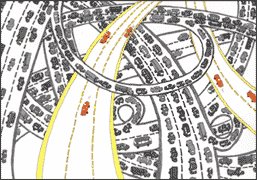
It makes perfect sense . . . as long as you think that the Internet is more like an airplane than a highway.

We don't allow a two-tiered system to rule our roads. Why? Because we see roads as basic public infrastructure on which all users are equal. People don't pay the construction company more just to use the fast lane.

But, we do pay more to sit in business class on an airplane. Airplanes use a class system based on price. And seats are limited. And pricing is complicated. That is what the telecom / cable companies want for the Internet.

So, should we view the Internet as a public highway, or a private airline?

Wednesday, April 05, 2006

Feelin' Minnesota

Two respected colleagues Sam Hiser and Andy Updegrove have already blogged news of the bill tabled in Minnesota's state legislature to require the use of open standards by state agencies. In fact, it makes open standards the default, and uses the power of budget approval to give the policy real teeth.

Two points to note in the bill:

1. It sets a very high threshold for getting an exemption to the open standards requirement -- only when it is "technically impossible."

2. It aggressively seeks to break proprietary lock-in. State agencies will not be able to avoid switching to open data formats simply because they have existing data in proprietary formats or because they use certain software.

Additional media coverage can be found here.

Tuesday, April 04, 2006

Is Open Source Being Corrupted?

In a recent report/interview, Michael Goulde of Forrester Research rang the alarm bell about the risk of profit-hungry tech companies corrupting the "open" values of open source communities and projects.

His argument (summarized here) is: As companies try to cash in on the open source phenomena and become more active in open source projects, they have a strong motivation to steer those projects (and the software produced by them) in directions more amenable to generating revenues and less in line with the principles of freedom to use, copy, modify distribute that open source software represents.

The shorthand argument is this . . . Absolute community corrupts absolutely. As open source communities increasingly involve vendors, their presence (and profit motive) risks corrupting the basic principles of open source software.

So, will the quest for profits erode the "open" in open source?

To begin, I see no inherant contradiction between open source and profits. Many do. I don't. Access to source code combined with the open source principles allows someone to take code, change it, build new softare on top of it, and sell a new software product (or service wrapped around it). Open source licenses protect access to code, but don't stop people from building businesses around it.

The real risks exist when there is no robust community behind an open source project, or if a vendor is trying to "open source" some proprietary software but does not really want to relinquish control over its development. In other words, if you don't have a truly open community, there is a risk that a vendor can steer development or impose conditions inconsistent with an open source model. But then again, any person with appropriate technical expertise willing to be very active in a project can "steer" it to some degree.

I would guess that a strategy to co-opt an open source project would, in most cases, fail in the end. Open and closed work differently. And developers easily spot the difference once they get involved in a project.

There is a certain resiliency involved in open source projects that have a critical mass of community behind them. And it is not easy to remove the fundamental elements of open source -- like code access and basic licensing terms -- without people noticing, and complaining loudly.

You can find additional commentary organized by Dave Rosenberg of the OSDL (including some of my own) here.

Sunday, April 02, 2006

A Business Case for OpenOffice & ODF

This is how ICT decisions should be made ... with a business case.

Here is one city's business case for the move to Star Office / OpenOffice for desktop computers. The city is Bristol (in the UK). And its business case includes a cost-benefit analysis of the switch to ODF.

So, the City of Bristol becomes #3 in the list of governments officially adopting ODF. Yesterday I blogged about #2, the National Archives of Australia (See below).

Saturday, April 01, 2006

Open ePolicy Group's Roadmap Drives Gov

Just saw this article in The Nation, one of Thailand's biggest newspapers. Apparently, the Open ePolicy Group's work is having real impact helping governments openize ICT ecosystems. Thailand will build its own national roadmap based on the Roadmap for Open ICT Ecosystems.

ODF Finds a New Taker

You knew it would happen eventually . . . and eventually is now. A second government agency is making the move to OpenDocument Format (ODF).

For the details, we go Down Under.

The National Archives of Australia will switch to ODF, as reported here.

Not surprising that ODF government adopter #2 is a public agency that is a data-intensive user. Preservation of public records is a major public interest, and national archives, like libraries, are natural leaders in the switch to ODF. For them, the business case is clear. Only ODF assures them the ability to archive documents in a format that will be accessible using tomorrow's software, whatever that might be.

Put simply, ODF guarantees the longevity of public records.

Thursday, March 30, 2006

Net Neutrality: Coming to a Politician Near You

Net neutrality is fast becoming a political football in Washington. Today, Democrats in Congress hit back against a Republican-backed telecom bill for its failure to protect net neutrality.

Jay Inslee, a Congressman from Washington, put his finger right on the button:
The ones that get hurt are the young innovators, the garage innovators, the small-business innovators, the ones that have not achieved the great success of the Googles of the world.

So far, the only excuse offered by Republicans against net neutrality is that no good definition exists. Feeble. Especially since their bill would prevent the FCC from trying to develop a workable definition, or considering any regulations on net neutrality. That's more than feeble; it's disingenuous.

Worse, the people who will feel the pain are consumers and all those entrpreneurs out there creating innovative content who won't be able to afford those "premium" fees the cable companies will soon be charging for life in the fast lane.

Wednesday, March 29, 2006

The Net Neutrality Hole

So, the battle over net neutrality is now joined in the U.S., as reported here.

The draft telecommunications legislation just released by the U.S. House Commerce Committee has opened a hole. And when it comes to laws, a hole is an invitation to fight. The only thing the legislation does is name the referee: the FCC.

The bill offers no rules or even principles about net neutrality, which is fine by telecom and cable companies. In their view, net neutrality is an answer in search of a problem, at best. And what they don't say is that they want the absolute right to divide up bandwidth to create new revenue streams by charging Internet content providers for "faster" delivery (i.e., loading) of the websites.

Here's my question: why was it a problem to state a simple principle of non-discrimination when it comes to Internet access? And then let the FCC enforce the principle based upon actual cases or anti-competitive activity.

Even that would have been a step forward from the situation today.

The FCC has issued a broad statement (available here) supporting competition among network, application, service and content providers. But it has not spoken with enough clarity to ensure the key to competition -- level playing fields. Worse, the FCC has no power to enforce this policy anyway. So, it's not only hopelessly vague, it's also toothless.

What do telecom and cable companies say? They pledge not to block any Internet content. Block. That hardly sounds comforting.

Every open ecosystem, including the Internet, rests on a few important principles, which include accessibility and non-discrimination. Unfortunately, I fear, these are exactly the "choke points" that telecoms and cable companies want to control. How? By controlling access to bandwidth and discriminating among content providers. To my mind, this sounds like it will have plainly anti-competitive effects on content providers, especially smaller Internet companies and individuals who create Web content.

I worry that the Internet will start to look like my cable TV -- expensive with few choices and limited content, compared to the Internet.

Maybe I'm wrong. I hope so.

But is it crazy to worry about net neutrality?

Thursday, March 16, 2006

Net Neutrality -- Does It Matter?

Have you heard about "network neutrality?" If not, you will. And you should.

Warning: telecom and cable companies are real unhappy about it and prefer you remain ignorant about it.

Why should I care about "net neutrality?"

Picture this. You connect to the Internet. Today, you type any website address in your browser and it loads. Every website loads at the same speed. It only depends on the speed of your connection (and how many graphics are on it). It does not depend on which website you want.

Without net neutrality, that will change. Companies or people who pay the telecom/cable companies a higher fee will have their websites load faster. The rest will load at "normal" speed.

Sound familiar? It should. It's basically how the cable TV business works. Cable companies control which channels you can watch and at what price. You pay $X for the basic service, $X+Y for premium service and $X+Y+Z1 for each additional premium channel you want. Oh, and different premium channels have different prices. Confusing?

But wait, there's more bad news! If you had an idea for a new TV program or someone filmed a new show, you could never see it unless a TV network AND a cable company both agreed to broadcast it. Cable TV has few public access channels. Blogs, podcasting, personal TV channels do not exist on cable TV. They never will. Cable is a totally proprietary model.

So why do telecoms and cable companies want to change how the Internet currently works? Money. New revenue steams.

They claim that they will take nothing away from current Internet access; they are just adding a new, additional service for those who want more. They compare it to a 2-lane highway -- there is one lane for cars going at normal speeds and one lane for cars wanting to go faster. Nothing wrong with that, right?

Well... Do you have to pay more on most highways to drive in the fast lane? No. Does every highway have a toll? No. Furthermore, how much choice for cable or telecom do you really have?

Where I live in Washington, DC there is only one cable company. And I cannot choose which channels I want; I can only choose among the packages offered by my cable company. Even with the cheapest, basic service I pay for lots of channels I don't want and never watch. But I still have to pay for them if I want access to the few channels I do want. One company, limited choices. That's lock-in. It's bad for consumers and bad for companies who want to offer new content and services to consumers. That's why the Internet has grown so much faster than cable TV globally.

The Internet faces few barriers from government or industry. It is based on open standards and non-discriminatory access. That is the best formula for innovation and growth -- for consumers and companies.

Yes, defining net neutrality will be difficult. But the principle is right and best serves our public interest --- our need --- for equal access to the Internet and all the content that the human mind can create. It leaves plenty of room for all kinds of innovation and proprietary business. But it ensures that the foundation of the Internet remains accessible, open, and non-proprietary.

Saturday, March 04, 2006

ODF Gets Organized

If OpenDocument Format ends up as the dominant file format in the world, it won't be by accident. It will be the result of an organized effort to show people that open data formats are an issue of public interest, of national interest. And more people need to hear about it.

A new global alliance of organizations, universities and companies -- the ODF Alliance -- has formed. Its major focus is on government adoption of ODF.

If you have seen this blog, you have heard the arguments in favor of ODF:

* assuring access to public records today and tomorrow

* guaranteeing that you own and control the documents you create (free from interference by any company)

* saving money by allowing you to avoid costly upgrades imposed by companies just so you can keep accessing your documents, and by giving you more software choices.

Cost. Control. Access to public information. Preservation of public records.

Who should care about these issues?

Everybody. Consumers, libraries, local governments, politicians, companies, international relief organizations, the media, schools.

The ODF Alliance will be a global partnership. Members come from all over the world -- Norway, India, U.S., Denmark, France, the Netherlands, Mexico, Germany and Austria. It is open to any organization, company and government.

Give them a visit and see for yourself. Take control over your information.

Friday, February 24, 2006

Here's my question . . .

If you receive a work-related email at 11 PM on a Saturday night, do you answer it?

Why do I ask?

I was thinking about this as I read a story about how people are working more, but accomplishing less, according to a new study.

The reason? Technology. It makes things move faster -- information, communications, products -- but it also crowds up our days with more stuff to deal with, which slows us down. It makes it harder to focus on one thing. It's also pushing work into our personal time.

A friend recently commented how emails and instant messaging were destroying the line between work and personal in his life. He was receiving work emails late at night, and felt the need to answer them even though it was his time at home.

My line between work time and personal time has broken down completely. I tend to answer emails (work or personal) based on how busy I feel, how much time it will take to reply and what else I have to do at that moment. But I don't feel that a work email is infringing on my private time. Maybe because my line between work and private does not depend on a clock. It's all a mix for me.

So, would you answer that work email on a Saturday night?

Tuesday, February 21, 2006

Collaboration, not code, is the key!

I say this in every presentation on the Roadmap for Open ICT Ecosystems when I discuss open source software: Collaboration, not code, is the key. Ultimately, the long-term power and impact of open source is not access to the code; it is the power of collaboration.

Yes, open source can save money. Yes, open source can give users greater control over their software. But changes in the proprietary model for software could close the gap with open source on these issues (e.g., vendors could cut costs, improve interoperability using open standards, provide controlled access to source code, or unbundle software so users don't have to buy functionality they don't need).

BUT, there is one thing that the proprietary model cannot duplicate: open collaboration. Why? Because this means giving up control, and they won't do that.

Enter open source as a model for collaboration.

Don't take my word for it. Examples are everywhere. Like . . . in Colorado. A lovely state. A few of its smallest towns may be the next hotbed for open technologies, as reported here. This is not happening in some big city with a huge IT department. It is happening in a rural, sparsely populated part of the state. Two towns and one county are building out e-government services together. By collaborating, pooling resources and development efforts, they move faster, save money and control their own destiny.

Don't believe me? Read the interview with Kent Morrison, IT Manager for the town of Steamboat Springs, Colorado. He put it very simply:

If you buy from a big company, you can get through to support people and they will answer your questions. But what if the company says it's releasing another version this year and you have migrate to it, because in another year they will abandon the previous version. You are forced to upgrade.

For example, we have a particular [proprietary] product that we have used for a couple of years. It's a fine product, but the manufacturer told us a year ago that there is a required upgrade that will cost us $15,000. I put that in the budget for 2006, but the city council says we can't afford it. The manufacturer does its best to provide support, but I'm literally running an obsolete product because I couldn't afford an upgrade.

There it is. Collaboration. Cost. Control. The keys to the kingdom that open technologies offer.

Friday, February 17, 2006

Consumers and ODF

Usually, consumers and technology do not mix well. Like oil and water.

But, once in a while, there are things that all of us need to pay attention to. They may sound techie, but really they are big issues of public interest.

Yesterday, I had the pleasure of joining a roundtable, organized by the Consumer Project on Technology, with a roomful of people representing consumer groups in the U.S.

The topic of discussion: Why consumers should care about OpenDocument Format?

As we heard at the meeting, consumers care most about a few things: cost, convenience, access to public information. Consumers don't want to care until they have to care.

So what does this mean for ODF? To begin, as one person suggested, the discussion needs to focus first on the problems, not the solutions. And real problems do exist. Here are 3 examples:

1. How can we guarantee access to public information and records today and tomorrow?

Governments already have a problem with the "digital decay" of electronic public records. Freedom of information means nothing if future access to public records is not assured. Preservation of public information and digitial records is a pressing problem already.

2. How can we guarantee the every person truly owns and controls the documents they create?

Right now, you do not own your documents. Maybe you create a letter, a report, a spreadsheet or a presentation on your computer. When you save it, your file has a .doc or .xls or .ppt at the end of its name. BUT, you do not own .doc, .xls or .ppt. One company owns them. And therefore, one company controls access to the documents that YOU created with your own hands and your own information. What happens if that company raises its prices? Or changes the terms for accessing your documents? Or goes out of business? Or forces you to buy new software (that you don't need) just to use your documents again? You have a problem, and no choices.

3. Why do I have to keep buying new software and paying more money when I don't need it?

For most people, the answer is simple and sad: because you have no choice if you want to use the documents you created and be able to share them with other people. There is an unnatural monopoly over documents in the world. And when the company who owns all our documents (because it owns .doc, .xls and .ppt) says you must "upgrade", then you must upgrade if you want to use your documents ever again. That is NOT an "upgrade" -- that is blackmail. And you -- the consumer -- pay for it.

We need to talk about these things in plain english, without techie talk.

And we need to be talking to groups who should care about these problems -- like ...

* consumer groups
* libraries
* international relief organizations
* schools and universities
* election organizations
* local governments
* media organizations
* other groups that care about freedom of information

All of these groups rely upon large amounts of information and documents and access to public records. All of them should be worried about the problems mentioned above. All of them should start talking about how to solve these problems.

And ODF will likely be part of that discussion.

Thursday, February 09, 2006

California Considers Open Source for Elections

Today -- Wednesday, February 8th -- a committee of the California State legislature, chaired by State Senator Debra Bowen, held a hearing to discuss the possibility of using open source software for elections.

Smart idea. For too long there has been inadequate attention to the architecture of election infrastructure. New technologies can be used to make voting easier, faster, more secure and transparent. But proprietary machines and software are not the best answer.

Electronic voting machines should run open source software AND produce paper records of all votes. It's as simple as that.

The case for open source here is compelling. There is no other way for government AND the public to be 100% certain that the software is secure, without flaws enabling abuse, and produces accurate (and verifiable) results. There is no second place here.

And once again, a state in the U.S. is stepping forward to seriously consider mandating open technologies for critical public services. Like voting.

California's State CIO, J. Clark Kelso, has gone beyond that, however. In September 2005, he established an Open Source Working Group composed of IT managers from 10 state departments.

Why?

According to California's 2004 Performance Review, open source is not just about cost savings. “Since the code is open, it offers the flexibility for organizations to modify the code as needed for specific uses. . . Open source can [also] provide superior security than closed source." Words to live by.

There it is. Cost, flexibility and security. The case for open technologies.

Wednesday, February 08, 2006

A National Campaign for Open Standards

My last blog entry highlighted a call to arms -- or open technologies -- for governments by Mark Shuttleworth, Ubuntu's founder.

And now, almost on cue, I find a government that has stepped up in a big way. Thailand. The Thai government, led by its National Electronics and Computer Technology Center (NECTEC), has launched a national campaign to promote open standards and open ICT ecosystems.

Thailand is serious about open technologies. They have established an inter-agency Working Group to coordinate its efforts nationally.

As I blogged earlier here, there is similar political movement afoot in Europe at the national level, notably by Denmark and Norway.

Thursday, February 02, 2006

Shuttleworth to Gov: Get in the Game!

I speak frequently about the need for governments to take affirmative steps to open their ICT ecosystems. This is a major point in the Open ePolicy Group's Roadmap for Open ICT Ecosystems.

This idea was echoed yesterday by Mark Shuttleworth, Ubuntu's founder, at a speech in the Philippines.

The Roadmap urges governments to increase the presence of open source in ICT ecosystems. This does not mean mandating open source in all cases. It does mean mandating choice in public procurement -- combined with actions that will increase the competitiveness of open source. Advocacy by governments, as Mark Shuttleworth urged, is one key step.

Sunday, January 29, 2006

Who Owns Your Documents?

This is important! Ask yourself this question . . .

When you create a Word document, an Excel spreadsheet or a Powerpoint presentation, do you own that document?

Maybe you wrote a letter. Or a presentation for a meeting. You did it on your computer with your own hands. It is your information you put into the document. But when you saved your document, the name of your file ends with .doc or .xls or .ppt.

You don't own .doc, .xls or .ppt

One company owns them. Microsoft.

So, it is your information you wrote, but do you own the document you created?

Who controls access to your information?

Friday, January 27, 2006

ODF's Biggest Disability

Wider acceptance and adoption of the OpenDocument Format (ODF) faces one major hurdle -- access for people with disabilities. This must be addressed quickly for ODF to take advantage of its head-start on Office Open XML. Access for disabled people is a deal-breaker for ODF. Without it, ODF is dead in water, politically. Fortunately, the issue is being addressed . . .

Andy Updegrove recently offered an update:

Disability issues: The ability of ODF to match, or surpass, the capacity of MS Office to accommodate those with disabilities remains an important test for implementation. Last week, Thomas Trimarco, the Massachusetts Secretary of Administration and Finance, delivered a [message] to representatives of the community of persons with disabilities stating that an evaluation will be made in mid 2006 to determine whether applications supporting ODF are likely to provide an acceptable alternative to MS Office for State employees with disabilities. If that need is not met by mid 2006, then the effective date of ODF implementation will be lagged as necessary until it is judged adequate to this task.

Meanwhile, work continues within OASIS to give final approval to and launch the new working group which will be chartered to facilitate use of applications supporting ODF by those with disabilities.

Wednesday, January 25, 2006

The Case for ODF

As you may have noticed, I have written several times about the need to raise awareness -- especially among consumers and users of technology as well as politicians -- of the value (and need) for open standards. This is especially true for open file formats like OpenDocument Format. The next 2 years are crucial for this.

Sam Hiser has made another valuable contribution to this effort today with his article in the Financial Times -- Progress Toward Openness is Being Watched Carefully.

The article clearly lays out the high value of ODF for data-senstive users like libraries and, yes, governments. Sam also offers a sharp distinction betweeen a truly open standard like ODF and a less-than-open standard like Microsoft's Office Open XML.

So, what will help spread awareness of the value of open standards? What groups can be engaged that are not yet part of this important dialogue? What are your thoughts?