 Just wanted to share this. The Open ePolicy Group is now an entry in Wikipedia available here. I expect the entry to evolve as the OeG enters into its second phase (More on OeG 2.0 later).
Saturday, October 07, 2006
Open ePolicy Group in Wikipedia
Just wanted to share this. The Open ePolicy Group is now an entry in Wikipedia available here. I expect the entry to evolve as the OeG enters into its second phase (More on OeG 2.0 later).


Thursday, October 05, 2006
France Says: Vive le ODF! Vive Open Source!
 The French government has taken another small step toward open standards, open source choices, and the full-scale adoption of the OpenDocument Format (ODF). This builds upon its earlier publication for comment of an Interoperability Framework that included the use of ODF.
The Prime Minister's Office commissioned a study on how European businesses could do more to develop industrial standards. Part of that answer is ODF. And part is building a critical mass of open source in its ICT ecosystem.
As the Open ePolicy Group has recommended, governments do not need to mandate open source in order to generate greater software choices and control over decision-making. Other policy options exist. The French report, authored by French National Assembly Deputy Bernard Carayon, offers a few examples when it suggests that government:
* fund a research center dedicated to open-source software security
* set up a system for exchanging best practices on open source for national and local government agencies
* allowing officials to choose among proprietary and open source software for their own workstations.
The rest of Europe should expect to hear from France about this ... The Report recommends that France start pressing its EU partners about ODF. Let the lobbying begin!
Thursday, September 21, 2006
ASEAN Pushes a Few Open ICT Buttons
 The IT Ministers of the Association of Southeast Asian Nations (ASEAN) issued a joint Brunei Action Plan for enhancing the ICT competitiveness of their economies and societies. When it comes to technology, ASEAN is making "open" its theme.
The Action Plan focuses on capacity building -- not surprising since most ASEAN members are developing countries keen to strengthen their knowledge and skill base. What may surprise some people are the things that this ICT capacity building is focused upon, such as free/open source software, open standards and the OpenDocument Format (ODF).
ASEAN directly links the realization economic and social benefits with ICT by specifically committing to "exploring open standards and open source technologies to increase ICT access and interoperability." ASEAN is clearly walking an open ICT path toward economic and social development.
And among the list of priority projects ASEAN offers: a training workshop on OpenDocument Format (ODF) and Free/Libre Open Source Software (FLOSS) Distribution Kiosks.
If open is as open does, then we should expect to see more open ICT efforts emerging from the ASEAN region over the coming years.
Sunday, September 10, 2006
Mr. Gates, Tear Down This Wall
 Criticism of Microsoft is fashionable. It is also easy, fun and often justified -- as in the case of its dealings toward the OpenDocument Format or its blind hostility to open source software.
 Everyone loves to hate Darth Vadar, the Borg, Hannibal Lecter, Saruman, lawyers, Starbucks, Bill Gates, or even better Steve Ballmer.
But, the enemy is not any one company or person. Walls are the enemy. Walls that suppport silos. Walls that prevent the sharing of information, documents, ideas and innovations. The genius of open source software is not the code but the collaboration -- its removal of walls.
Open ICT ecosystems are not fortresses, and should not be managed with the same fortress mentality that sadly characterizes many organizations and companies. This applies equally to Microsoft, Red Hat, open source communities, CIOs and governments.
Open technologies-- like open standards and open source--are a fact of life. Open approaches to innovation and business are increasingly tranforming economies and enterprises.
And yet, sometimes dramatic steps are needed to re-shape an ICT ecosystem that remains under competitive, for example when it comes to technology choices ...
... which brings us to the Phillipines.
A bill called the Free/Open Source (FOSS) Software Act of 2006 will be presented on Tuesday, September 12th requiring government agencies to use open standards and open source software. The bill is serious about preventing vendor lock-in:
"Under no circumstances are ICT goods and services to be acquired by the State restricted for use in a single vendor environment only. All prospective ICT investments of the government shall comply with open standards, and existing ICT systems will be reviewed for open standards compatibility."
The legislation will allow government use of proprietary software only when no open standards-based alternatives are available, or when a proprietary system is already widely in use and no open standards-based technology exists that interoperates with it. Oddly enough, that last exception may create a disincentive for major proprietary vendors NOT to interoperate if their products are already widely used within the Phillipine public sector.
Laws requiring open source have been a cause of controversy in recent years. In the Open ePolicy Group's Roadmap for Open ICT Ecosytems, we recommended that people focus less on the software development model and more on actions that increase choice and competition.
Why? Because open ICT ecosystems are neither 100% open or closed; they are a mixed environment. With open standards as a foundation, specific software procurement should be driven by the business case and clear public policy needs.
From that perspective, much of the draft Phillipine legislation seems designed to build a critical mass of open ICT in its ecosystem. It will promote research in open source software, incorporate open source into the computer science curriculum in schools, and provide legal recognition for open source licenses. These are all important ways to even the playing field for open source without mandating its procurement.
Tuesday, September 05, 2006
Do Patents Threaten Open Source and Innovation?
 It is impossible to separate innovation from access to information, ideas and invention. But what happens when ownership of a broadly defined idea prevents its future use by a larger community of creators?
As Jim Moore at Harvard put it, "The patent process provides legal protection to inventors, so that when they take their ideas to companies for possible commercialization, the inventors are not cheated out of the intellectual assets they have created." True. Moore compares patents to home ownership. "The rights of a patent are analogous to the real estate title to a home or land. You have the exclusive rights to use your home or land -- within some limits (zoning, etc.)."
The problem, especially with technology patents, is that title often claimed by patent applicants includes a broad and vague description of its boundaries. To borrow Moore's analogy, they often describe the building vaguely AND fail to define the zoning. This is not by accident. Intellectual property rights are valuable, and there is a huge economic incentive to occupy as much "real estate" as possible, including land that does not yet exist. Securing pre-emptive ownership of land created in the future is a big part of patent strategies for many companies. This has turned patents -- an important shield for inventors -- into a profitable sword.
Software is an especially difficult area for intellectual property. And even more difficult now that open source approaches to collaboration and software development are proliferating, and accelerating software innovation globally. Complex software by definition addresses a wide range of concepts. It is no surprise that more and more software (developed in house in a proprietary way or as open source) is subject to claims of patent infringement, when more and more patents include very loosely described concepts. The result: more lawsuits.
Open source software is especially vulnerable to the patent sword given its approach to development based on collaboration, sharing of concepts and re-use of code. Although well suited to today's high speed, networked world, it does not fit comfortably with our 19th Century rules on intellectual property, or the monetary imperative of many companies to use them.
Indeed, there are companies designed purely as litigation factories. They don't make anything, except lawsuits.
Case in point: FireStar Software v. Red Hat. FireStar is suing Red Hat in court arguing that it patented the entire concept of object/relational mapping, not merely a specific method or software for using it. Such lawsuits are increasingly common, and may have a real chilling effect on open source developers and projects. Put another way, the enforcement of today's vague patent risks tomorrow's big innovation.
The challenge is to create an intellectual property regime better suited to a digital, networked world where the re-use of ideas is more rapid, more disruptive, and more closely linked to tomorrow's innovation.
Thursday, August 31, 2006
Public - Private Partnerships for Open Source
 Public-private partnerships (PPPs) are much discussed these days by governments everywhere. The connection between innovation, growth of IT industry and PPPs will be one focal point for the work of the Open ePolicy Group 2.0.
In addition to my work on PPPs, I have been looking for examples of governments with PPP initiatives related to open technologies (open source, open standards, open architectures).
Today's example: Vietnam.
Vietnam's Central Committee for Science and Education has signed an MOU with Intel to jointly set up an OpenLab for the development and testing of open source software. Testing laboratories are nothing new, for Intel or other global IT companies. Labs focused on open source software are less widespread, but a growing trend. By partnering with the private sector, such PPPs can help governments overcome common concerns about the security and reliability of open source. And this PPP will produce the goods. In the end, Vietnam expects to install open source on 27,000 of its public sector PCs.
If you think this is simply about Vietnam luring a big investment from Intel, think again. Vietnam's government is intent on accelerating growth of its domestic IT industry and its e-government efforts. Vietnam is a government with a plan -- an official plan -- a National Plan for Open Source Software Development and Application. It is investing $20 million of its own money to develop open source locally.
What is driving this effort? As an official from Vietnam's Ministry of Science and Technology put it, "We are trying step by step to eliminate Microsoft."
Do you know of other PPPs focused on open ICT? The Open ePolicy Group would love to hear about them. Post a comment here to share it.
Tuesday, August 29, 2006
Denmark to ODF: Show Me the Money
 ... and it will. As a new report completed for the Danish government says, switching to OpenDocument format will save money. Big money. $94 million over five years, according to the Open Source Business Association.
The report examined the costs of various options for document formats when implementing a new Danish law that requires use of open standards by January 1, 2008.
Over time, we will see more quantitative cost assessments and business cases on decisions related to document formats. This will be important to convince governments and other high-volume document creators of the wisdom in moving to ODF and other open standards.
Choices exist. Microsoft Office and its developing Office Open XMLA. OpenDocument Format. But the real obstacle, as noted by Morten Helveg Petersen, one of the key architects behind the Danish Parliament's decision on open standards, is indecision.
Facing choices, governments often have trouble making a decision, especially if the cost implications are unknown. The availability of detailed cost evaluations and business cases will go a long way to overcoming indecision and accelerating the adoption of ODF. Money talks.
[All credit to John Gotze for publicizing this development in Denmark.]
Thursday, August 24, 2006
Goods News for ODF in Mass. (Despite Delay)
 Full implementation of ODF adoption in Massachusetts has, it seems, been delayed six months until June 2007. But this minor slippage in execution is good news, not bad. Why? ODF adoption will begin in January 2007 as planned. And a plugin to allow Microsoft users in the public sector to save in ODF format, as a temporary "fix," will allow a smoother evolution to complete ODF implementation.
 And who will be one of the early users of this plugin beginning in January? The Massachusetts Office on Disability. With a more realistic schedule for implementation, it seems clear that Massachusetts is on track for full ODF rollout with the support (even leadership) of the community of users with disabilities.
This is an important development, in both political and technological terms. The implementation schedule is still ambitious and will surely face difficulties. However, it means that a major political obstacle has been cleared. It also means that support and engagement by the disability community will drive further innovations in assistive technologies. It is fair to ask: would this have happened if ODF never arrived on the scene?
Open ICT in Eastern Europe, and a Hint of ODF
 There has been speculation about the likelihood that open technologies --- open standards and open source -- will take root in Eastern Europe. I noted before that the ODF Alliance has over 30 members from Eastern European countries. In general Europe is showing leadership in the evolution of open ICT ecosystems, including adoption of open source and the OpenDocument format.
Now there is specific news about open ICT in Eastern Europe, and it comes from Croatia.
The government has announced a broad policy to adopt open source software across the public sector, together with guidelines on the development and procurement of software. Although the "open source" element of the policy is making all the headlines, it is misleading to think that Croatia has issued a requirement that all software be open source. Rather, the government is taking a more balanced approach.
Open source will be preferred over closed source solutions. Closed source software is not shut out entirely. The government intends to support local development of closed source software that meets open standards and, interestingly, open file formats. Schools will present both open and closed software to students, thus equipping them to work and innovate in a world of mixed technologies.
Why the big move in Croatia? Three factors compelled the government:
* Control: The desire to break its dependency on vendors and escape the rigid commercial conditions imposed on them is strong among governments. Freedom from external limitations will allow the government--i.e., the user--to modify, extend or link software as needed. It also creates greater transparency and interoperability not only in terms of its technology but also for public information and services.
* Growth: The importance of promoting innovation and market alternatives in technology cannot be understated. Growth is both an economic and a political issue. Governments seek to build domestic ICT markets, and see open technologies as one strategy to lower market barriers for new innovators.
* Money: Money matters. Open ICT enables more rational distribution of budgets by creating an ecosystem in which there is greater collaboration (and cost sharing) in the development, maintenance, and use of ICT. This helps reduce the total public expenses of providing public services.
And the hint of things to come for ODF in Croatia? Consider what Domagoj Juricic, leader of the Central State Administrative Office's e-Croatia project, said:
The state administration bodies create and exchange a lot of electronic documents. There is a great danger that documents cannot be opened and presented in readable form after a certain time, because we don't have the licence anymore of the proprietary software, or the vendor can seize support of the old types of documents. Therefore we require the state administration bodies to use open standards for creating electronic documents.Do I hear the sound of ODF knocking on the door in Croatia?
Open policies are an important step, but policies are only paper. Translating these policies into actual procurement will be key to actually changing how services, technology and people act.
A side note: Sam Hiser, who predicted an ODF move in Croatia, is well positioned to take the silver medal for ODF predictions. (I had guessed a possible move in Malaysia who announced official consideration of ODF in July.)
Tuesday, August 22, 2006
ODF Delayed in Massachusetts?
 The State of Massachusetts will release its mid-term assessment of OpenDocument. Apparently, recent discussions with disability rights groups have had an impact.
As blogged here previously, the issue of how ODF will affect accessability by people with disabilities is a political deal-breaker for ODF, not just in Massachusetts but for all levels of governments in the U.S.
At least one news source is reporting that CIO Louis Gutierrez will announce a delay in the scheduled January 1, 2007 implementation of ODF until an adequate plug-in can be developed.
One other notable news on open standards:
* Open Standards & RAND: In case you doubted my previous objections to the use of "reasonable and non-discriminatory" (or RAND) as a sound element of open standards, look no further than this story. In a legal battle between Nokia and Qualcomm, the fight is over the meaning of RAND. To repeat my view on this: RAND is not an objective standard and will only generate endless litigation. It is something only lawyers could love. It should not be part of any definition of an open standard.
Tuesday, August 15, 2006
A Laptop for Every Child, in Thailand
 It's official. Thailand's (current) Prime Minister officially announced plans to provide every primary school child a laptop free of charge.
It is a bold policy. It will cost millions to deliver, even though Thailand is partnering with the One Laptop per Child project which will provide laptops at a cost of $100 each. And yes, a country like Thailand still has pressing social needs that require more resources. But, Thailand sees that it will never get where it wants to be without dramatic steps to eliminate its digital divide among its youngest generation.
There are complaints about the laptop. It does not have a hard drive. The price of computers is dropping every year, and companies are already starting to market laptops under $500.
All true.
But flash drives, web services and online storage are tomorrow. Hard drives are yesterday.
And companies? Yes, computers are getting cheaper. But not cheap enough to ensure every child can afford one in Thailand, or the U.S. The "One Laptop per Child" project has challenged the market. Companies will respond if governments (and others) move enough units. That is how competition works. Demand driving supply, and innovation.
Now, if Thailand can match trained teachers and engaging content with those $100 laptops, it will see exciting things happen in the future of its children.
Monday, July 31, 2006
Spain Steps onto the ODF Map
 Two days ago, the Council of Government of the Spanish region of Extremadura -- La Junta de Extremadura -- decided to adopt the OpenDocument Format (ODF) as the official format for exchange of information and documents among government officials.
 By adopting ODF, Extremadura becomes the first Spanish Administration to not only mandate ODF, but to adopt any standard data format. Wisely, the Extremadura government is giving all agencies one year to complete the transition to full use of ODF (and Linux as well).
The official announcement is here in spanish.
What is driving Extremadura in its move to ODF and open source? Its press release focuses on four factors: (1) perpetural access to public documents; (2) breaking dependency on proprietary formats and vendors; (3) security; and (4) cost.
It should not surprise anyone that Extremadura is leading Spain in the adoption of open standards. Last year, it began a large-scale migration to Linux in its schools and hospitals. Extremadura's regional government has publicly linked the use of open source software to the region's long-term economic and social development.
Sunday, July 23, 2006
Will ODF Bring a New Orange Revolution?
 Maybe a new Orange Revolution is coming. If so, the first shot was fired in the small Dutch city of Groningen.
 A municipal government in the Netherlands has decided to cancel its Microsoft contract and migrate to OpenOffice beginning in 2007. The main driver behind the unanimous decision of the City Commission of Groningen: cost savings.
And plenty of it. At least €330,000 of savings. That is real money for a city of 180,000 people and translates into saving €1.8 per person. Extrapolate that for the entire Netherlands and you have a savings of about €29 million. Even with the cost for training and ongoing support, the long-term savings should be considerable.
The decision was the result of a 3-year process which begin in 2003 when three organizations proposed a move to open source and open standards to the City Commission.
And since OpenOffice provides full support for the OpenDocument Format (ODF), Groningen is going open on the open standards and open source tracks at the same time.
That should give the Dutch fans something to cheer about.
Friday, July 21, 2006
Who is the ODF Alliance?
 There is no doubt that the ODF Alliance has been a major success since launching less than 5 months ago. As of today, the Alliance lists 274 members from 45 countries plus 1 international organization.
I do not know if a breakdown of membership gives us any clues about the next governments to adopt ODF, but it does present some interesting things. Here are the top 25 countries of origin (and number of ODF Alliance members):
US (54)
France (19)
UK (18)
Germany (14)
Netherlands (14)
Australia (13)
Denmark (10)
Italy (10)
Canada (9)
Czech Rep (9)
Poland (9)
India (7)
China (6)
Switzerland (6)
Hungary (5)
Portugal (5)
Russia (5)
Spain (5)
Ireland (4)
Norway (4)
Sweden (4)
Belgium (3)
Brazil (3)
Mexico (3)
New Zealand (3)
Taiwan (3)
No surprises at the top with the U.S. and European countries dominating the top of the list.
But there a few interesting points. 31 members from Eastern Europe. That is more than Asia which has 26. Only 9 members from Latin America. Africa has only 1 member from South Africa. No South Korea. No Thailand. Only 1 from Japan. Given the strength of Asia in open technologies like open source software, it may be fertile ground for ODF if a greater push is made.
And maybe it will be Eastern Europe that provides the next ODF adopter, as Sam Hiser predicted here.
Tuesday, July 18, 2006
Next Stop for ODF: Asia?
 Maybe it was just a lucky guess. Or maybe I was just name dropping. Or maybe I had a psyhic connection created during the year that I lived in Kuala Lumpur. Who knows? But there is new forward motion for the OpenDocument Format (ODF) in Asia. Location: Malaysia.
 It seems that Malaysia is not content to boast the world's tallest building. Now it is aiming to be the first country in Asia to endorse ODF.
Hasan Saidin has blogged about an ODF proposal made to the SIRIM, the national standards developing agency appointed by Malaysia's Department of Standards Malaysia.
Today, a meeting of SIRIM's technical committee on e-commerce unanimously approved a "project" to make ODF an official standard in Malaysia, perhaps as soon as end of 2006. This initiative did not appear from nowhere. Malaysia voted "Yes" for ODF to become an ISO standard. Now, it may be headed to official adoption in Malaysia, and a place at the center of Malaysia's national ICT agenda.
Friday, July 14, 2006
Who is Next in Line for ODF?
 Just for the hell of it, I will offer a guess (based on no inside information) ... the next government to consider making open standards and the OpenDocument Format official policy will be in ...
Italy.
Maybe I am just overly influenced by Italy's victory in the World Cup, but I see a critical mass of support for open technologies slowly building in Italy over the past five years. A few notable facts:
1. 3 of the ODF Alliance's newest members since Google joined were from Italy.
2. Firefox share of the browser market in Italy is now over 20%, one of the highest in the world.
3. The Province of Genoa has made open source software a part of its ICT strategy.
4. Italy's Minister for Innovation and Technologies issued a ministerial order in October 2003 inviting public sector bodies to consider open source alternatives.
4. As far back as 2001, the Italian Government identified open source as a key enabler for building an Information Society in Italy.
OK, I am probably wrong about Italy.
But this I know: there will be a next government that endorses the use of ODF. I don't know where, but there will be another. And it will be really interesting if it happens in a region other than Europe. South Korea? Malaysia?
What do you think?
How Critical is Open Source?
 If you ask the U.S. Department of Defense...
 "OSS and open source development methodologies are important to the National Security and National Interest of the U.S."
Why?
Because, according to a new DoD report, open technologies ...
• Enhance agility of IT industries to more rapidly adapt and change to user needed capabilities.This is the open source imperative. And it applies with equal force to every government and company. Despite the continued protestations of proprietary vendors, if your business model fails to incorporate open technologies, eventually your business will be at a competitive disadvantage.
• Strengthen the industrial base by not protecting industry from competition. Makes industry more likely to compete on ideas and execution versus product lock-in.
• Enable DoD to secure the infrastructure and increase security by understanding what is actually in the source code of software installed in DoD networks.
• Rapidly respond to adversary actions as well as rapid changes in the technology industrial base.
You might as well tie one hand behind your back and use the other hand to shoot yourself in the foot.
Competing without open source ...
creates an arbitrary scarcity of ... software code, which increases the development and maintenance costs of information technology ... Other negative consequences include lock-in to obsolete proprietary technologies, the inability to extend existing capabilities in months vs. years, and snarls of interoperability that stem from the opacity and stove-piping of information systems.The shift to more open approaches--using open standards, services-oriented architectures, open source style collaboration and innovative partnerships--must not only touch the ICT level in an enterprise. It must impact your business, information and service levels as well, and link them together.
SOA is not enough. The integration of service-oriented business, information and service design is critical to enterprise transformation, and competing in today's rapidly shifting marketplace and ICT landscape.
Yesterday's approaches to R&D, distribution and intellectual property served well in an industrial era; they are poorly suited for today's networked, high-speed, on-demand world.
Thursday, July 13, 2006
Pearl Jam Faces an Inconvenient Truth
 Over the past few years, we've seen quite a few musicians stand up on heavy political issues. Bono. REM. Springsteen. Credit Sir Bob Geldoff, author of the 1980s campaign to feed a starving Ethiopia.
Now Pearl Jam faces up to an Inconvenient Truth, something that precious few politicians (and few of us regular folks) dare do. Global warming is a crisis, and not tomorrow. It is here today, so says every serious scientist whose work has been peer reviewed.
Here's what the U.S. National Academy of Science says: "The changes observed over the last several decades are likely because of human activities, for the most part."
Enter Pearl Jam. The Seattle-based rockers have pledged $100,000 to offset the carbon emissions generated during their global tour.
Pearl Jam has a Carbon Portfolio Strategy.
Does your organization? Does your city? Do you?
But don't worry, what's one more year of record heat?
Wednesday, July 12, 2006
Google Joins ODF Alliance ... Is it Official?
 Apparently, according to a story in Computerworld, Google joined the ODF Alliance on Saturday (4 days ago). The ODF Alliance quietly listed Google on its website as a member, with no press release or announcement, clearly by agreement with Google.
 Google is saying even less. There is nothing on its website indicating its membership in the ODF Alliance. No press release, no announcement on its official blog. If you search Google News for "ODF Alliance" and Google, you get 0 search results.
This all begs the question ... why hasn't Google made any public statement about joining the ODF Alliance, which it apparently did 4 days ago?
Obviously this is news. Good news, though not completely unexpected given Google's acquisition of Writely, an online collaborative word processing program that supports ODF. If joining the ODF was news when the City of Bristol in the UK did (and it was), why has Google given this the silent treatment? Even when directly asked about it.
Well, a few explanations are possible ...
Maybe Google is waiting to jointly announce support for ODF by its new, online Google Spreadsheets?
Or, maybe Google has decided to make its announcement at an upcoming, high-profile event? [Though they must have known word would get out and they'd be behind the news]
Or maybe they don't want to treat joining another group as news? [But it is news, especially given the increasing importance of ODF and the major news its adoption by governments generated.]
 So, Eric, Larry and Sergey ...
 what's the story?
Tuesday, July 11, 2006
Open ICT and Inconvenient Truths
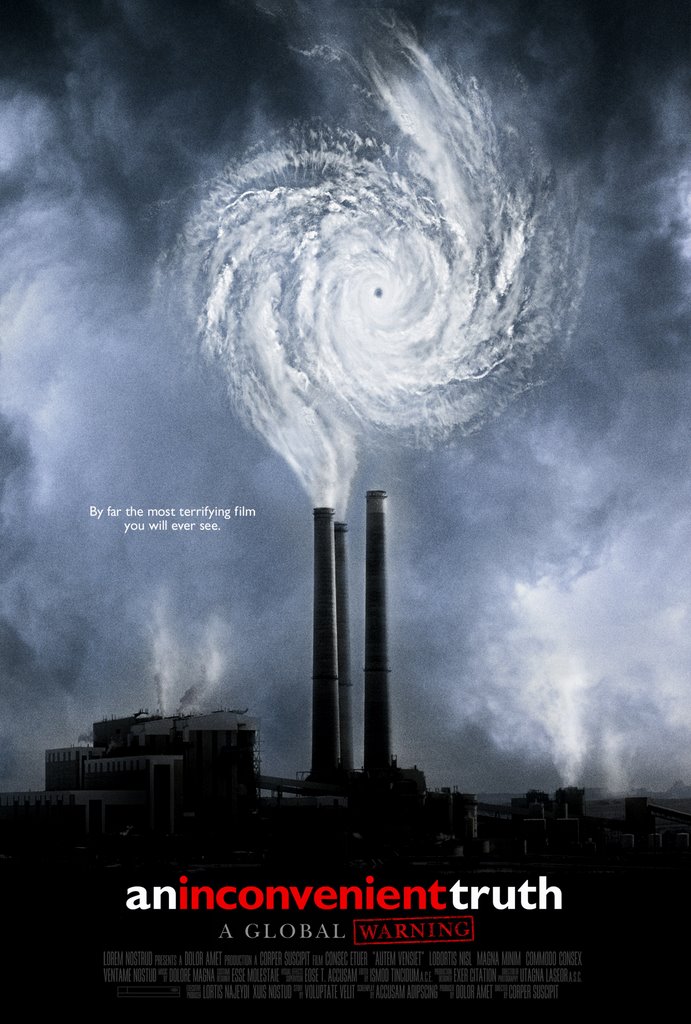 I just saw the movie "An Inconvenient Truth", and it got me to thinking about the intersection between my work on open technologies and global warming. Don't see the connection? Neither did I until tonight.
First of all, GO SEE THIS MOVIE. Regardless of your politics -- better yet, suspend your politics -- and actively watch this film. If you walk out not convinced that we are in the midst of a global crisis, a REAL crisis, you are either deaf, dumb and blind, or you sadly fall into the category of people described by Upton Sinclair and quoted by Al Gore in the movie:
"It's difficult to get a man to understand something when his salary depends upon his not understanding it."
So, the connection between global warming and open technologies?
That same thought -- the difficulty in people seeing things differently when their jobs, up until that point, depended on the status quo -- applies to IT companies (and governments) and open technologies. Open source is an obvious example. Or Creative Commons as a new approach to copyright. Or software as a service (the expertise of other Jeff Kaplan). Or new ways of sharing music and photos (before Napster, now BitTorrent). It's the same quandery for Microsoft and the Opendocument Format.
Here's an inconvenient truth for the IT industry: successful business models will more and more integrate (even depend upon) greater, deeper collaboration with users, customers, non-staff content creators and even competitors (e.g., in context of creating open standards).
More and more, you have to collaborate to compete.
Subscribe to:
Posts (Atom)


 Posts
Posts


